The Corner Booth Knows Your Name: The Quiet Happiness of Being a Regular Somewhere
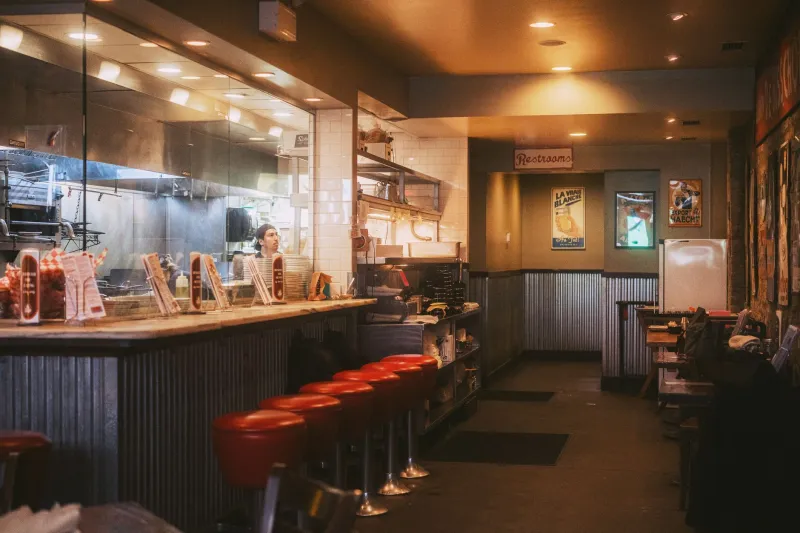
The coffee lands on the table before Dennis says a word. Two creams, no sugar, in a heavy white mug the staff have unofficially named after him. He's been coming to this diner in a strip mall outside Columbus, Ohio, every Tuesday and Friday since 2011, and he hasn't had to explain how he likes his eggs in roughly a decade.
“I don't come for the food,” he says, which is a bold claim given the patty melt. “I come because Brenda asks about my knee.”
That's the whole pitch, really. Not the menu, not the vinyl booths, not the rotating pie case. It's that somebody in the building knows what's happening with his knee.
The term is 'third place,' and you probably need one
In 1989, sociologist Ray Oldenburg gave a name to the spaces that are neither home (first place) nor work (second place). Third places, he argued in The Great Good Place, are the diners, barbershops, libraries, churches, bar stools, and rec centers where community actually happens — casually, repeatedly, without a reservation or a cover charge.
A decade later, Robert Putnam's Bowling Alone charted what happens when those rooms thin out. Leagues shrank, club rosters shrank, and evenings migrated toward screens. The pattern has only sped up since: remote work, delivery apps, and a phone that can entertain you for six hours straight have made it possible to be technically socialized and genuinely lonely at the same time.
You don't need a study to feel it. You need a Tuesday.
Three regulars, three rooms
Maria, 34, works nights in an ER in Phoenix. Her third place is the public library two blocks from her apartment, where she shows up most Saturdays around nine — not strictly for the books, but for the woman at the reference desk who started setting aside new mystery arrivals for her. “She knows my taste better than my ex did,” Maria says. “It's a ten-minute conversation and it fixes my whole week.”
Diane, 58, has been cutting hair in the same two-chair shop in Cleveland for 26 years. She can tell you whose daughter is applying to nursing school and whose husband is finally retiring. “People think they come in for the cut,” she says. “They come in because someone is going to ask them a question and then actually listen to the answer.”
And Dev, 71, a retired teacher in Sacramento, stops at the same neighborhood hardware store every Saturday morning. “I bought one screwdriver in 2019 and I still show up,” he says. “Gus lets me stand there and complain about the Raiders. That's the product.”
Notice what none of these people are doing: spending much. A library card is free. A haircut is a monthly expense he'd need anyway. Dev's decade-long relationship with Gus cost him $8.99.
Why it's harder than it sounds
If being a regular is so great, why does it feel so awkward to start? A few reasons, and all of them are surmountable.
The cost of showing up. Third places used to be free by default — a town square, a front stoop, a church basement. Now the default version involves a $7 latte. That's a real barrier, and it's why libraries, parks, community centers, and barber shops matter so much.
The scheduling problem. Sprawl and long commutes carve the day into chunks. A place you have to drive 20 minutes to isn't a third place, it's an errand.
The 'everyone already knows each other' fear. Almost nobody in the room grew up there. They just showed up more than twice.
How to become one without spending much
- Pick one place, not five. Repetition beats variety. Two visits a week to one spot will do more than a tour of the neighborhood.
- Anchor it to something you already do. After the gym. Before work. Sunday morning errands. Attach the habit to an existing habit and it sticks.
- Go at the same time. Regularity is the entire currency here. Same day, same hour, same corner of the counter.
- Learn one name and use it. Your server, your librarian, your barber, the guy at the register. Names are free and they change everything.
- Ask one question that isn't about the transaction. 'How's your week going?' is enough. Listen to the answer.
- Survive the awkward phase. Visits one through three feel like auditions. By visit five, someone will nod at you.
- Tip like a person, not an app. The person refilling your coffee will remember the difference.
The coffee is not the point
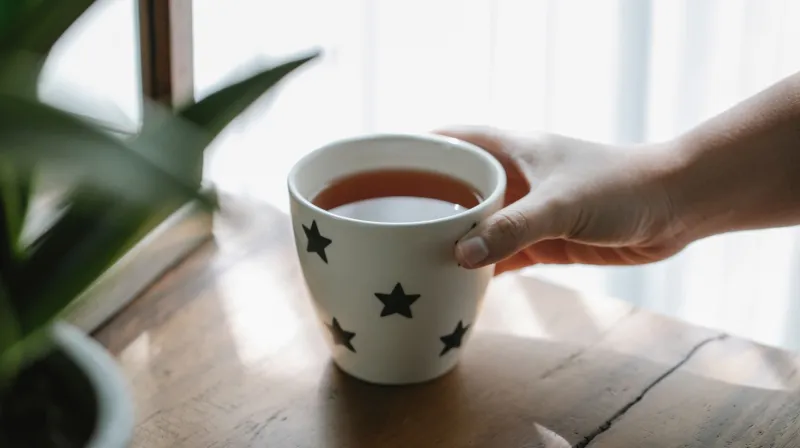
Dennis has a mug with his name on it. Maria has a librarian who thinks about her reading list. Diane has 26 years of haircuts and a mental rolodex of her neighborhood's news.
None of it required a membership, an app, or a personality transplant. It required showing up, on a schedule, with enough attention to notice the people around you.
So pick a place. Go twice this week. The coffee, if there is coffee, will take care of itself.