Forty-Five Minutes in Aisle 12: The Case for Wandering a Hardware Store With No Project
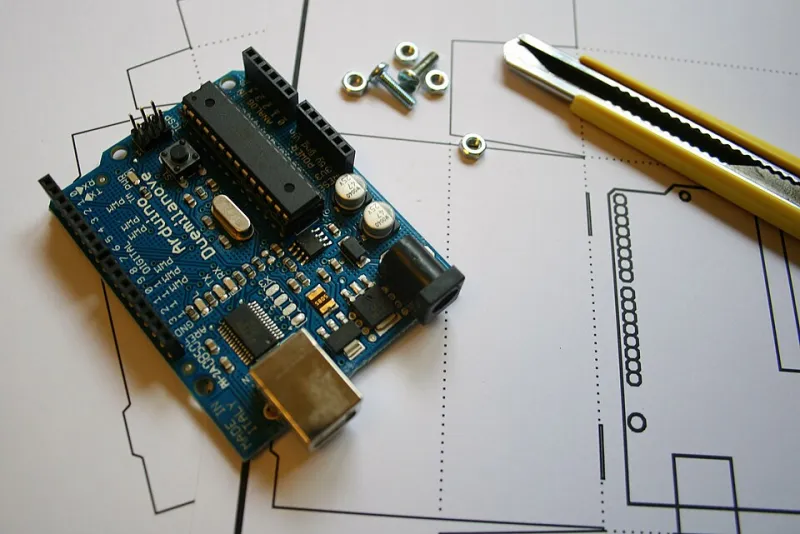
Photo: oomlout, CC BY-SA 2.0, via Wikimedia Commons
Saturday morning. No list. No drippy faucet, no wobbly chair, no project waiting at home. I walked into a neighborhood hardware store because the door was propped open and the place smelled like cut lumber and burnt coffee, and I walked out forty-five minutes later having run rope through my hands, hefted a cast-iron skillet I did not need, and learned from a man named Dale that two nearly identical bolts differ by forty cents and one of them will quietly ruin your weekend.
Nobody asked me to buy anything. Nobody asked me to leave. That is the entire pitch.
The Cheapest Museum in Town Charges Nothing
Museums are wonderful. They are also hushed, roped off, and papered with signs that start with 'please do not.' A hardware store is the inverted version of that experience: bright, slightly chaotic, and built around the assumption that you will pick things up.
Where else can you run your palm down a coil of manila rope, slide open a drawer of brass hinges, weigh three hammers against each other like you're judging melons, and stand in front of a paint chip wall reading names like 'Quiet Moment' and 'Toasted Almond' that somebody was paid actual money to invent? The garden center next door adds humidity, dirt under your nails, and a whole room that smells like a rainstorm that hasn't happened yet. The farm-supply store down the road sells chick feeders, work gloves, and candy by the register, which is a combination no curator has ever been brave enough to attempt.
It is free. It is air-conditioned. It is open on Sundays. And unlike almost every other indoor space in America, it actively wants you to touch everything.
The Rules of the Aisle Wander
Here is the whole challenge. Set a timer for forty-five minutes and follow six rules.
- Bring no list. If you arrive with a purpose, you'll be in and out in nine minutes and you'll have missed the point entirely.
- Phone stays in your pocket. Not for photos, not for a quick check. The wander only works if you're actually bored for a minute or two.
- Touch at least five things you have no use for. A hinge. A level. A single decorative knob shaped like a pineapple. Curiosity is a physical act before it's a mental one.
- Ask one employee one genuinely dumb question. What's the difference between these two bolts? What is this tool even for? Who buys this? Store staff are the most underused free docents in the country, and they would love to tell you.
- Set a spending cap — ten dollars or zero, your call. The cap is the point. It converts shopping into browsing and removes the guilt that makes people rush.
- Leave when the timer goes off, whether or not you found anything.
Different Buildings, Different Flavors
The chain home-improvement giants work for this, but the format really sings in the smaller formats. An older independent store with narrow aisles and handwritten price tags is the gold standard — there's usually a bulletin board by the door covered in business cards for a guy who sharpens lawnmower blades. Garden centers in late spring are their own genre: seedlings, ceramic pots, wind chimes, and the mild competitive energy of people comparing tomato starts. Farm-supply aisles are the wildest of the three, equal parts practical and surreal, where a fifty-pound bag of feed sits three feet from a novelty doormat.
Bring a Kid, or Borrow One
If you have a child in your life, this is the best free hour available to you. Kids treat hardware stores the way adults treat national parks. The spring display alone — doors, hinges, bouncy things, telescoping objects — is a playground. Hand them a basket and let them choose one item under three dollars. The deliberation is worth the trip on its own.
No kid? Go alone. That's arguably better. Aisle-wandering is one of the last activities in American life with no social obligation attached to it.
Pointless Curiosity Is a Skill, and It Atrophies
Most of what we call leisure now is delivery: a show queued up, an order on the way, a feed that refreshes itself. It's pleasant and it's frictionless and it asks nothing of you, which is exactly the problem. A hardware store asks something small and specific: pay attention, look at a thing, wonder what it does.
That's it. That's the whole joy. Not productivity, not self-improvement, not a finished bookshelf. Just the low-grade delight of standing in front of a wall of unfamiliar objects and being curious for no reason at all.
What You Take Home
Usually nothing. Occasionally a two-dollar roll of twine you didn't need and will absolutely use. And almost always one piece of information you'll repeat at dinner — the bolt thing, the tool thing, the fact that the store has been in the same family since the Truman administration.
The timer goes off. You walk back into the parking lot squinting. Forty-five minutes, zero dollars, and a head slightly clearer than it was when you went in. Most museums can't promise that, and none of them let you touch the rope.