Nobody Hangs Out Anymore — And Trivia Night Might Be the Fix
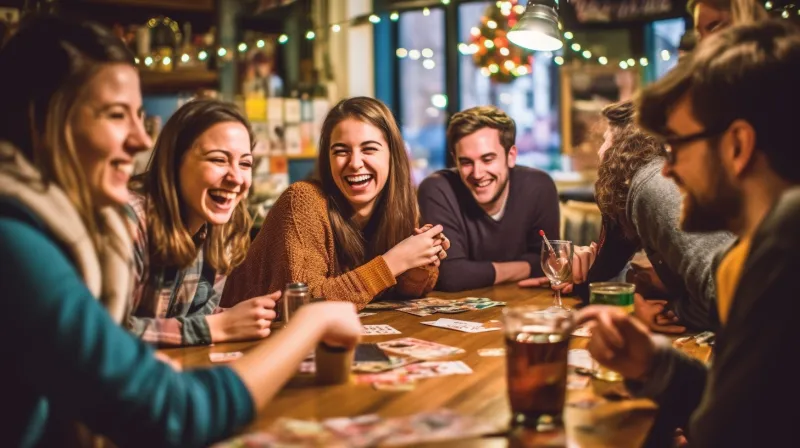
Photo: friends playing trivia night at cozy neighborhood bar laughing, via quizrunners.com
There's a particular kind of magic that happens at a neighborhood trivia night. A team of strangers argues passionately about whether a narwhal is a real animal. Someone's aunt knows every Bond theme by heart. Nobody's career is on the line. Nobody's scrolling. For two hours, a bar becomes something more than a bar — it becomes a living room the whole neighborhood shares.
We don't have nearly enough of those living rooms anymore.
Where Did All the Hangout Spots Go?
Sociologists call them "third places" — the spots that aren't home and aren't work, where you can show up without an appointment and belong anyway. Ray Oldenburg, who coined the term, argued that democracies run on them. Coffee shops, barbershops, bowling leagues, the diner counter where the waitress knows your order.
Look around and you'll notice the shortage. Independent cafés have been squeezed out by rent and apps that let you order without making eye contact. Bowling alleys — once the backbone of suburban social life — have closed by the thousands since the '90s. Malls swallowed community centers' foot traffic, and then online shopping swallowed the malls. Even the classic American porch has been swapped for a screen door you never open.
The pandemic poured accelerant on a fire that was already burning. We got very good at staying home, and home is comfortable. But comfort isn't the same as connection, and study after study shows what we've lost: Americans report spending dramatically less time with friends than they did a decade ago. We're notlonely because we're unlikable. We're lonely because the places where likable people bump into each other keep closing.
Showing Up Is a Form of Optimism
Here's my argument, and I'll make it plainly: going to a mediocre trivia night at your local bar is not a fallback plan. It's a civic act.
Third places don't survive on sentiment. They survive on bodies in chairs. The bookshop that hosts a Wednesday book club stays open because people show up on Wednesday. The dive bar with the Tuesday quiz keeps its lights on because twelve teams care who knows the most about state capitals. Every dollar spent on a $6 beer at a community event does more for your neighborhood's social fabric than a hundred likes on a group chat.
And the payoff isn't abstract. Regulars at recurring local events report something researchers struggle to manufacture: "weak ties" — the friendly acquaintances who make a neighborhood feel like a neighborhood. The guy you always see at kickball. The woman who's ferociously good at the music round. These relationships don't show up on your contact list, but they show up in your sense of belonging.
The Quiet Rebuilders
Across the country, people are rebuilding the third place without waiting for permission.
Bookstores, written off for dead twenty years ago, have reinvented themselves as community anchors — hosting poetry nights, silent reading clubs, and singles' events where the icebreaker is built in. Municipal rec leagues have exploded: dodgeball for accountants, kickball for people who peaked in middle school and are at peace with it. Even run clubs — the least romantic activity imaginable — have become the new singles bars, minus the dim lighting.
What all of these have in common is that they're low-stakes and recurring. That's the secret formula. Not a networking event, not a dinner party that requires a clean kitchen. Just a slot on the calendar where the same faces show up and something mildly delightful happens.
How to Save a Third Place This Week
You don't need to open a café. You need a Tuesday.
- Pick one recurring event within fifteen minutes of your house — trivia, open mic, a run club, a chess night at the library — and go twice before deciding if you like it. The first time is always awkward. The second time, someone nods at you. That nod is the whole point.
- Bring one person, not a crowd. Third places run on mixers, not cliques.
- Buy something, even small. The rent is real.
- Be a regular before you're a leader. The best community organizers all started as the person who just kept showing up.
The third place isn't dying of natural causes. It's dying of empty chairs. Fill one, and you're not just having a good night — you're casting a small, stubborn vote for a world with more of them. That's not a chore. That's joy with a side of fries.