Walk Like You've Got Nowhere to Be: A Defense of the Pointless Lap Around the Block
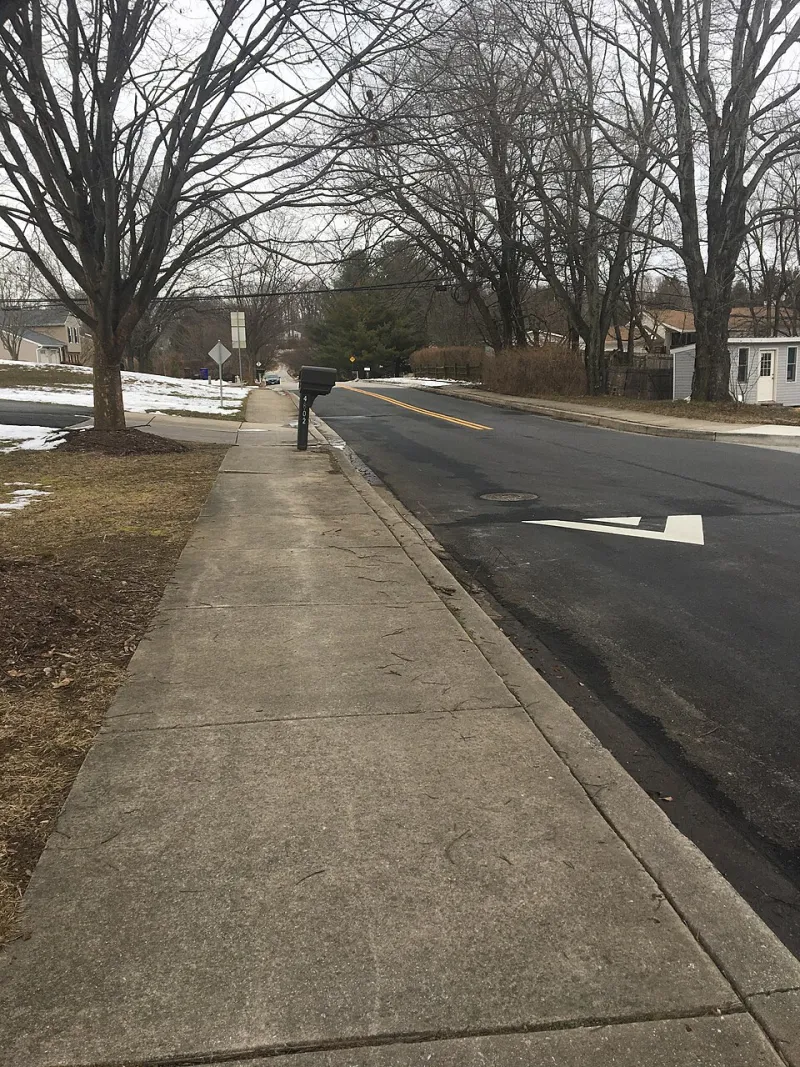
Photo: Apelcini, CC BY-SA 4.0, via Wikimedia Commons
It was 8:40 on a Tuesday. Shoes on, podcast queued, watch already counting. Then the earbuds died mid-block. Rather than turn around, I did something I hadn't done in probably five years: I finished the loop with nothing in my ears.
The first six minutes were honestly boring. Then the street got loud in a way I'd forgotten it could be.
The walk that isn't training for anything
Somewhere in the last decade, the evening walk quietly became a workout. It got a step goal. It got a pace. It got a downloaded coach reminding us we were in Zone 2. There is nothing wrong with any of that — but it does change what the walk is for. When the point is the number at the end, the street becomes scenery, a moving backdrop you're supposed to ignore.
The unfashionable version, the one your grandparents did after dinner, had no number attached. You went out. You came back. That was the entire transaction.
Your ears are the most underrated part of the walk
Take the headphones out on a normal residential block at dusk and you get a sound mix no app will ever build for you. A screen door. A sprinkler that needs adjusting. Someone's bad trumpet through an open window. A basketball with too little air in it. A car radio idling at the stop sign, playing something you'd never choose and secretly like.
What struck me most was how much of it was people. Not people doing anything in particular — just people being faintly, audibly alive nearby. In a country where plenty of us live within a hundred feet of a neighbor and speak to them roughly twice a year, that's not nothing.
The weak-tie economy of a sidewalk
Sociologists have a name for the people you recognize but don't really know: weak ties. Back in the 1970s, Mark Granovetter's research made the case that these half-strangers — the guy at the mailbox, the woman with the terrier — are weirdly valuable. They're the ones who pass along the tip about a job opening, a decent plumber, a dentist who actually answers the phone. Your closest friends mostly know the same things you already know.
Sidewalks manufacture weak ties for free. You don't schedule them or text ahead or bring a dish. You just have to be outside at the same time as somebody else. Jane Jacobs made a similar point about city blocks decades ago: a street with people on it does a lot of quiet work, and it feels safer because it genuinely is more watched.
You cannot get any of that from a treadmill. You definitely can't get it from the earbud version of your own block.
Same loop, different movie
Here's what nobody tells you about walking the same four blocks every night: they are not the same four blocks. Trash night is a different street than a dry Tuesday. In mid-November you watch holiday lights go up house by house — some the weekend after Halloween, some grudgingly around December 20. You learn which porch light is always on and which house has the dog with opinions.
That's not a small thing. Familiarity is a form of entertainment, and it's the cheapest one going.
Six ways to make the loop an actual adventure
Nothing here needs gear or a plan. Pick one.
- Take the alley instead of the avenue. Alleys have better graffiti, weirder sheds, and at least one cat with a territorial dispute.
- Walk to a thing, not past it. The Little Free Library. The house with the truly unhinged lawn ornaments. The dead end that looks like it should lead somewhere.
- Do the slow lap. Three blocks out and back at half your normal speed. Uncomfortable for about ninety seconds, then genuinely fascinating.
- Say the one thing. One compliment per walk, delivered to a stranger, then keep moving. 'Nice lights' counts. So does 'great dog,' as long as you don't stop and make it weird.
- Follow a sound. Church choir practice, a garage band, a basketball game at the school. Stand at a respectful distance and enjoy the fact that it isn't a podcast.
- Turn when you feel like it. No route. If a street looks interesting, take it. You can't get lost four blocks from your own kitchen.
The rule is that there's no rule
I'm not going to tell you to do this nightly, or for thirty minutes, or to track it. The whole point is that it doesn't count toward anything. It's the one slice of the day that isn't preparing you to be more productive later.
Still — try it once this week. After dinner, coat on, phone in a pocket or on the counter, no destination. Give it ten minutes before you decide it's boring. Somewhere around minute seven, the street usually starts talking.